Article: Badalassi Carlo Pueblo Leather: The Complete Guide to Pueblo Vegetable-Tanned Leather
Badalassi Carlo Pueblo Leather: The Complete Guide to Pueblo Vegetable-Tanned Leather
If you have spent any time looking for premium leather for wallets, cardholders, watch straps, bags or other handmade leather goods, you have probably come across Pueblo leather by Badalassi Carlo.
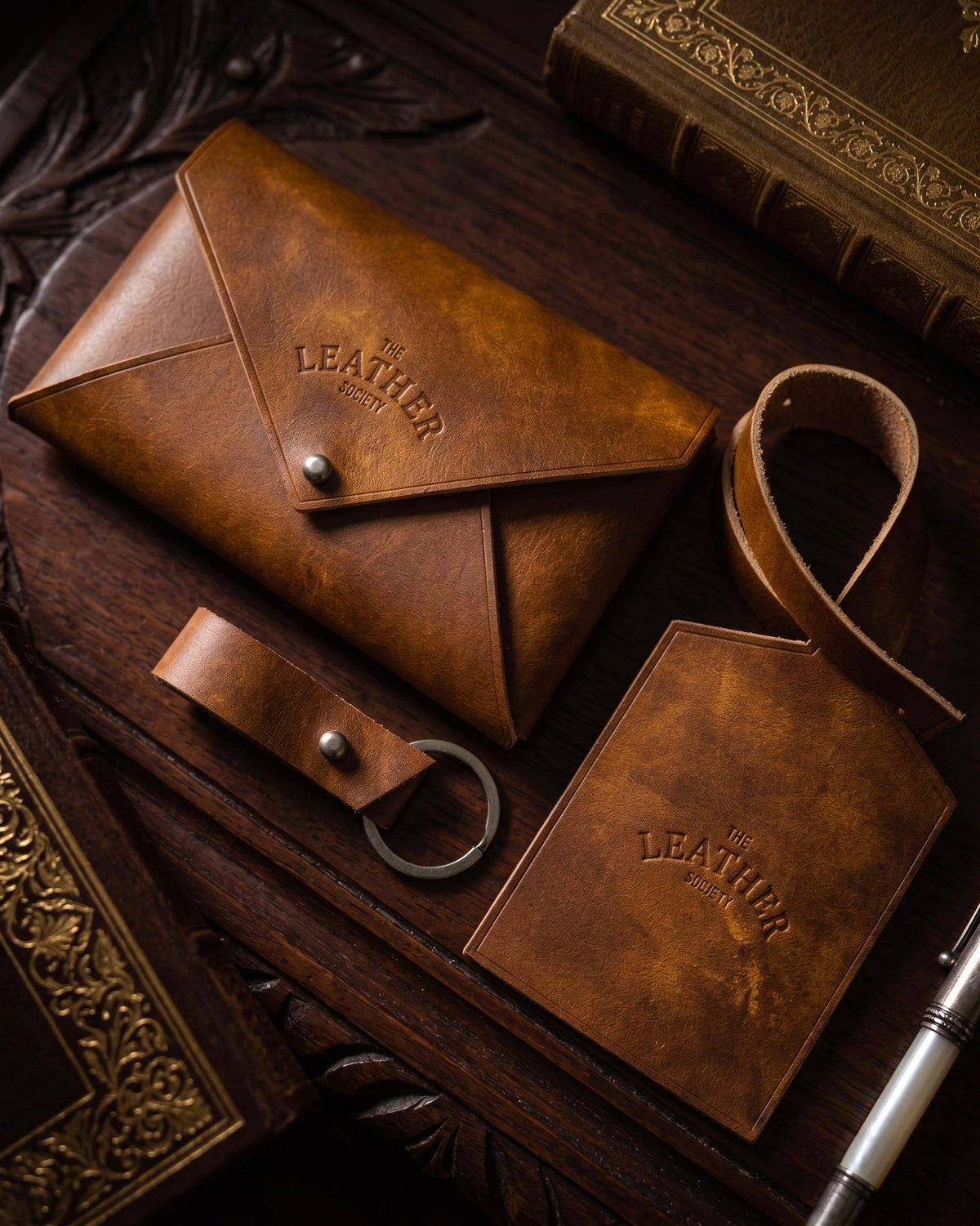
Pueblo is one of the most recognisable vegetable-tanned leathers produced by the Italian tannery Badalassi Carlo. Made in Tuscany, Pueblo is known for its distinctive matte, textured surface, rich colours and particularly dramatic patina.
Unlike smooth vegetable-tanned leathers, Pueblo has a deliberately textured surface when new. With use, that surface gradually becomes smoother, the colour deepens and the leather develops a natural sheen.
This combination of traditional vegetable tanning, full-grain construction and an unusual surface treatment has made Badalassi Carlo Pueblo leather especially popular for handmade wallets, cardholders, watch straps, notebook covers, bags and other small leather goods.
What Is Pueblo Leather?
Pueblo is a full-grain, vegetable-tanned cowhide produced by Badalassi Carlo in Tuscany, Italy.
The leather is associated with Badalassi Carlo's range of traditional vegetable-tanned leathers and is known for its characteristic rustic appearance. Unlike a conventional smooth leather surface, Pueblo has a deliberately rough, fibrous or lightly napped texture that gives it a distinctive tactile feel.
The surface can initially look almost suede-like, but Pueblo is not suede. It is a full-grain leather, meaning the natural grain layer of the hide remains intact.
This is one of the reasons Pueblo is so interesting to work with. You get the structural characteristics of full-grain leather together with a surface that looks and feels very different from conventional smooth leather.
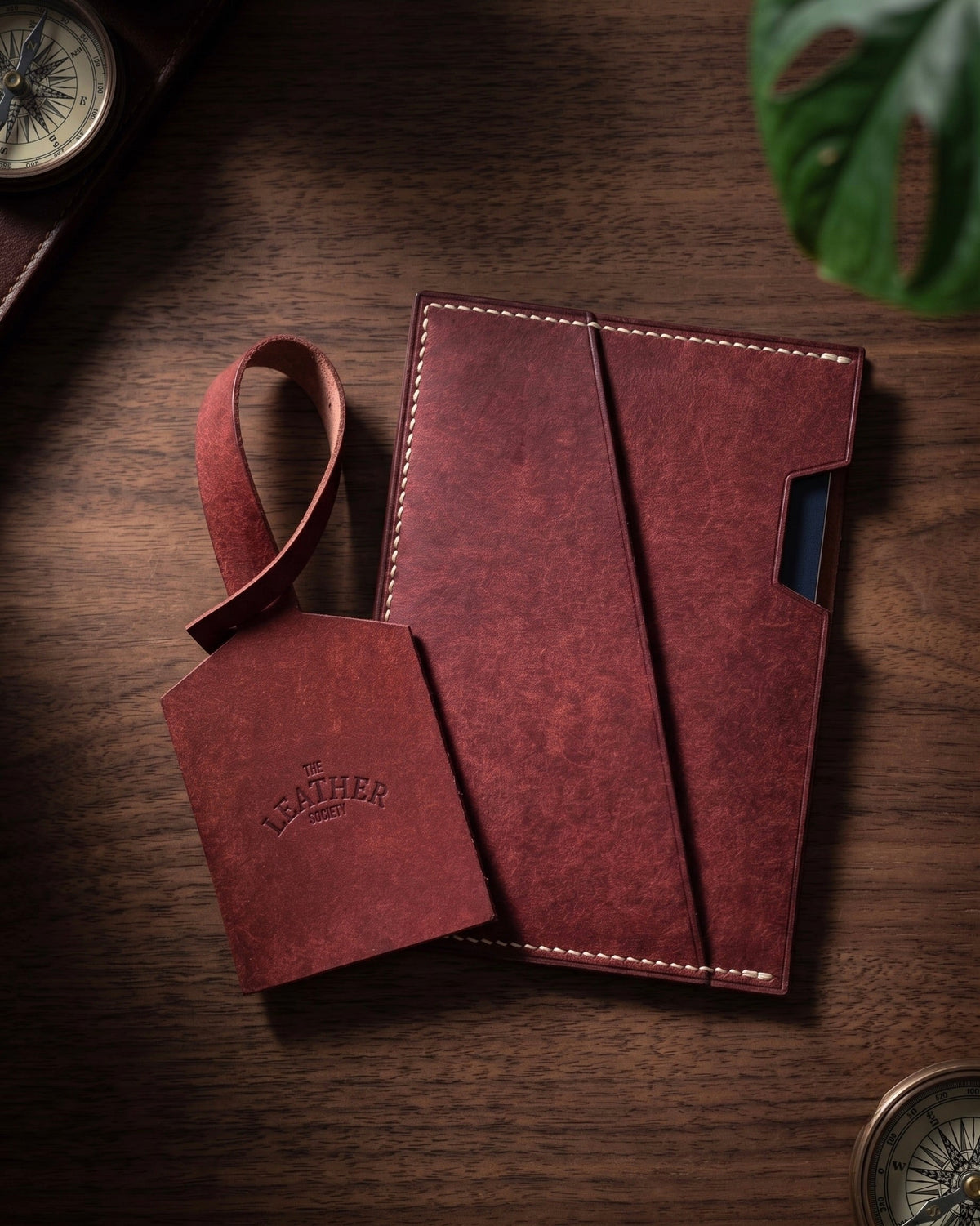
The leather is also available in a wide range of colours, including earthy browns, cognac tones, greens, blues, reds and other vibrant shades. Exact colour availability can vary by supplier and production batch.
Who Makes Pueblo Leather?
Pueblo is produced by Badalassi Carlo, a tannery located in Ponte a Egola, San Miniato, in the Tuscan leather district of Italy.
According to the Consorzio Vera Pelle Italiana Conciata al Vegetale, Badalassi Carlo has specialised in vegetable-tanned leather for more than 40 years. The tannery produces vegetable-tanned leather for applications including footwear, handbags, leather goods, bookbinding and technical articles.
Badalassi Carlo is also one of the associated tanneries of the Consorzio Vera Pelle Italiana Conciata al Vegetale, commonly known as the Genuine Italian Vegetable Tanned Leather Consortium.
The consortium brings together tanneries operating within Tuscany's traditional leather district that produce vegetable-tanned leather. Badalassi Carlo is listed among its member tanneries.
This distinction is important because "Italian vegetable-tanned leather" is a broad description. The consortium provides a recognised connection to the traditional Tuscan vegetable-tanning industry, while Pueblo itself is a specific leather article produced by Badalassi Carlo.
How Is Pueblo Leather Different?
The first thing you notice about Pueblo is its surface.
New Pueblo does not have the smooth, polished appearance associated with many other vegetable-tanned leathers. Instead, the surface has a matte, textured and slightly fibrous appearance.
Leather suppliers and makers commonly describe this as a lightly napped, brushed or suede-like surface. The texture gives Pueblo its characteristic rustic appearance while retaining the underlying properties of a full-grain leather.
The surface treatment is what gives Pueblo much of its visual character.
Rather than trying to make every hide look perfectly uniform and glossy, Pueblo embraces a more tactile and natural-looking finish. The result is a leather that already has considerable character when it is new, then changes significantly as it is handled and used.
That makes Pueblo particularly appealing if you enjoy leather that ages visibly rather than remaining largely unchanged.
Pueblo Leather and Its Patina
Patina is arguably the biggest reason people choose Pueblo.
When new, Pueblo has a distinctive matte and textured appearance. As the leather is handled, rubbed and exposed to everyday use, the surface gradually becomes smoother.
At the same time, the colour can become deeper and richer, while the surface develops increasing levels of sheen. This transformation can happen relatively quickly compared with many other leathers.
This means that two Pueblo wallets made from the same colour can look very different after several months or years of use.
A frequently handled wallet may develop smoother areas around the edges and high-contact points, while the folds and areas exposed to less friction can retain more of the original texture.
The result is a piece of leather that gradually records how it has been used.
For people who appreciate patina, this is one of Pueblo's biggest advantages.
Does Pueblo Leather Change Colour?
Yes, Pueblo is well known for its colour development over time.
Many colours become darker and richer as the leather is handled and the surface becomes smoother. The exact rate and extent of this change depends on the colour, amount of handling, exposure to friction and the individual piece of leather.
Because Pueblo is a natural full-grain leather with an aniline finish, variations in grain, colour and surface character are normal. Different hides, and even different areas of the same hide, can respond differently over time.
This is part of the appeal of vegetable-tanned leather.
It is not designed to look permanently identical to the day it was purchased.
Is Pueblo Leather Full Grain?
Yes.
Pueblo is commonly specified as full-grain leather, meaning the grain layer of the hide has been retained rather than being sanded away to create a more uniform surface. Current leather specifications from established suppliers identify Pueblo as full grain.
Full-grain leather can show natural characteristics such as variations in grain, wrinkles, scars and other marks from the original hide.
For Pueblo, these characteristics can complement the leather's intentionally rustic appearance rather than detract from it.
Is Pueblo Leather Aniline?
Pueblo is commonly specified as an aniline-finished leather, and established leather suppliers describe the article as being dyed through with an aniline finish.
Aniline leather generally retains a more natural surface appearance because it does not rely on a heavy opaque pigment coating to create a uniform appearance.
This is one reason natural variation remains visible in Pueblo.
It also means that you should expect some variation between individual hides and colour batches. If you are selecting leather for a project where colour consistency is particularly important, requesting a physical sample is always preferable to relying solely on photographs.
Is Pueblo Vegetable Tanned?
Yes.
Pueblo is a vegetable-tanned leather produced by Badalassi Carlo. The tannery itself specialises in vegetable-tanned leather and is listed as an associated tannery of the Consorzio Vera Pelle Italiana Conciata al Vegetale.
Vegetable tanning uses tannins, naturally occurring compounds found in plants, to convert animal hide into leather.
It is one of the traditional methods of tanning leather and is particularly associated with Tuscany's historic leather industry.
However, it is important not to confuse "vegetable tanned" with "completely chemical-free" or "chemical-free leather". Tanning is a controlled chemical process, and vegetable tanning specifically refers to the use of vegetable-derived tannins as the primary tanning agents.
What Does Pueblo Leather Feel Like?
Pueblo has a distinctive feel when compared with smooth vegetable-tanned leather.
When new, the surface can feel slightly rough or fibrous because of its characteristic finish. The underlying leather is generally described as having a medium or semi-firm temper, although the exact feel can vary depending on thickness and the particular piece.
With use, the surface becomes noticeably smoother.
This is an important characteristic to understand before buying Pueblo. If you want leather that remains smooth and polished from the beginning, a smooth vegetable-tanned leather may be a better choice.
If you want a leather that starts with a distinctive matte texture and progressively transforms through use, Pueblo is a much more interesting option.
Is Pueblo Leather Durable?
Pueblo is a full-grain leather and is widely used for everyday leather goods such as wallets, cardholders, watch straps, notebook covers and bags.
However, durability should not be judged by tannage alone.
The final performance of a leather product depends on factors including the thickness of the leather, the area of the hide used, construction, stitching, edge finishing and how the product is used.
For example, a properly constructed wallet made from appropriately selected Pueblo can be extremely suitable for everyday use, while a thin piece of Pueblo used in an application requiring substantial structural support may not be appropriate.
This is why selecting the right thickness and temper for the intended product is just as important as selecting the tannery.
What Can You Make With Pueblo Leather?
Pueblo is particularly well suited to products where its texture and patina can be appreciated.
Common applications include:
-
Wallets
-
Cardholders
-
Passport covers
-
Watch straps
-
Notebook and journal covers
-
Small leather goods
-
Phone and tablet covers
-
Bags and pouches
-
Other handmade leather accessories
Its distinctive surface also makes Pueblo an interesting choice when you want a finished product that looks different from conventional smooth leather.
For smaller leather goods, the patina can become a major part of the product's character.
Pueblo Leather Thickness
There is no single thickness that applies to every piece of Pueblo.
Pueblo is available through leather suppliers in different thicknesses and can also be split for particular applications. Current specifications from different suppliers show Pueblo being offered in thicknesses such as approximately 1.2-1.4 mm, 1.8-2.0 mm and around 2.2 mm, depending on the supplier, stock and application.
The right thickness depends on what you are making.
For example, thinner Pueblo can be useful for wallets, card slots and lined goods, while thicker cuts may be more appropriate when greater body and structure are required.
There is no universally "best" Pueblo thickness. The correct choice depends on the construction and intended use of the finished product.
Pueblo vs Smooth Vegetable-Tanned Leather
The easiest way to understand Pueblo is to compare it with a conventional smooth vegetable-tanned leather.
Pueblo
-
Full-grain vegetable-tanned leather
-
Distinctive matte, textured surface
-
Rustic appearance
-
Develops patina relatively quickly
-
Surface becomes smoother with use
-
Strong visual character from the beginning
-
Available in a broad range of colours
Smooth vegetable-tanned leather
-
Usually has a comparatively smooth surface
-
Shows the grain more clearly
-
Can have a cleaner and more refined appearance when new
-
Also develops patina with use
-
Often better suited to projects where a smooth finish is preferred
Neither is objectively better.
It comes down to the look and ageing characteristics you want.
If you want a classic, smooth appearance, a leather such as a smooth vacchetta may be more suitable.
If you want a more tactile, rustic surface that changes dramatically through use, Badalassi Carlo Pueblo is one of the more distinctive choices available.
How to Care for Pueblo Leather
One of the advantages of Pueblo is that it does not need an elaborate maintenance routine.
For everyday products, the best approach is generally to handle the leather normally and allow it to develop naturally.
Keep the leather away from excessive moisture, avoid unnecessary exposure to harsh chemicals and store it in a dry environment when not in use.
For light surface dirt, a soft, dry cloth can be used gently.
Because Pueblo's surface is intentionally textured when new, aggressive rubbing or excessive conditioning can change its appearance. There is also little reason to repeatedly apply leather conditioner simply because the leather is vegetable tanned.
If a specific Pueblo product has manufacturer or maker care instructions, follow those instructions first.
Can Pueblo Leather Be Burnished?
Pueblo can respond well to friction and rubbing.
Leather suppliers and makers commonly report that rubbing or burnishing the surface can make it appear smoother and darker by bringing out the leather's natural character.
This is also part of what happens naturally during everyday use.
A wallet carried in a pocket, for example, experiences constant friction from handling and contact with other objects. Over time, that friction contributes to the characteristic transition from Pueblo's original matte texture toward a smoother, more polished appearance.
Why Is Badalassi Carlo Pueblo So Popular?
There are many vegetable-tanned leathers available, so Pueblo's popularity is not simply because it is vegetable tanned.
Its appeal comes from the combination of several characteristics:
1. A distinctive surface
Pueblo looks different from smooth vegetable-tanned leather from the moment you pick it up.
2. Dramatic patina
The leather changes visibly with handling, making the ageing process part of the product's character.
3. Full-grain construction
The natural grain layer is retained, allowing the leather to display its own character rather than being heavily corrected.
4. Strong colour selection
Pueblo is produced in a broad range of colours, from understated earth tones to more vibrant shades.
5. Traditional Tuscan production
Badalassi Carlo is part of Tuscany's established vegetable-tanning industry and is an associated tannery of the Vera Pelle consortium.
Together, these characteristics make Pueblo particularly appealing to leatherworkers and customers who want a material that becomes more individual through use.
Is Pueblo Leather Good for Handmade Leather Goods in Singapore?
For leatherworkers and customers in Singapore looking for a premium Italian vegetable-tanned leather, Pueblo is an interesting choice when the goal is a product with visible character and a strong ageing story.
Its combination of full-grain leather, vegetable tanning and distinctive surface texture makes it particularly suitable for products such as wallets, cardholders, passport holders, watch straps, notebook covers and other small leather goods.
Singapore's warm and humid climate does mean that leather products should be kept away from prolonged moisture and stored appropriately when not in use. As with any natural leather, the way a finished product is constructed and cared for will have a significant effect on its longevity.
The most important thing is to choose the leather based on the product rather than choosing the leather first and trying to make it fit the application.
Pueblo Leather: Is It Worth It?
If you appreciate leather that develops character rather than staying unchanged, Badalassi Carlo Pueblo is one of the most interesting Italian vegetable-tanned leathers to consider.
Its appeal is not that it is flawless or perfectly uniform.
Quite the opposite.
Pueblo is designed around character. The textured surface, natural variation and rapid patina are central to what makes the leather distinctive. With use, the rougher surface gradually becomes smoother and the colour develops greater depth and sheen.
That makes every finished product slightly different.
For a wallet, cardholder, passport holder or other everyday leather item, this ageing process can be part of the experience. Instead of simply buying a finished object, you are effectively watching the material evolve with you.
And that is ultimately what makes Badalassi Carlo Pueblo leather so appealing.
It is not simply Italian vegetable-tanned leather.
It is leather designed to change.
Looking for Premium Leather Craftsmanship in Singapore?
At The Leather Society, we believe the leather you choose is an important part of the experience, whether you are creating a personalised leather gift, attending a leather crafting workshop or planning a corporate leather gifting experience.
If you are looking for leather crafting workshops in Singapore, personalised leather goods or premium corporate leather gifts, explore our services to see how we can help you create something designed to be used, kept and remembered.
Frequently Asked Questions About Pueblo Leather
Is Badalassi Carlo Pueblo real leather?
Yes. Pueblo is a full-grain cowhide leather produced by Badalassi Carlo in Italy and vegetable tanned.
Is Pueblo leather vegetable tanned?
Yes. Pueblo is a vegetable-tanned leather produced by Badalassi Carlo, a Tuscan tannery specialising in vegetable-tanned leather.
Is Pueblo full grain?
Yes. Pueblo is specified by established leather suppliers as full-grain leather.
Does Pueblo leather develop patina?
Yes. Pueblo is particularly well known for developing patina relatively quickly. Its textured surface gradually becomes smoother and the colour and sheen develop with use.
Does Pueblo leather get darker?
It can. Many Pueblo colours deepen and develop greater visual depth as the leather is handled and develops patina. The exact change depends on the colour, use and individual hide.
Is Pueblo leather durable?
Pueblo is a full-grain leather commonly used for everyday leather goods including wallets, watch straps, bags and other accessories. However, durability also depends on leather thickness, construction and how the finished product is used.
Is Pueblo leather waterproof?
No leather should be treated as completely waterproof simply because it is vegetable tanned. Pueblo should be protected from prolonged exposure to water and excessive moisture.
What is the difference between Pueblo and Minerva?
Both are associated with Badalassi Carlo's vegetable-tanned leather range, but Pueblo is recognised for its distinctive textured, matte surface, while Minerva is generally associated with a smoother surface.
Where is Badalassi Carlo Pueblo leather made?
Pueblo is produced by Badalassi Carlo in Tuscany, Italy. The tannery is located in Ponte a Egola, San Miniato, within Tuscany's historic leather district.
Is Pueblo leather good for wallets?
Yes. Pueblo is widely used for wallets, cardholders and other small leather goods, particularly where its distinctive texture and patina are desirable.
Does Pueblo leather become smooth?
Yes. One of Pueblo's defining characteristics is the way its textured surface gradually becomes smoother through handling and use.
Does Pueblo leather scratch?
Like other natural full-grain leathers, Pueblo can show marks from handling and use. Its textured surface and developing patina can make these marks part of the overall ageing character rather than something that necessarily needs to be eliminated.
Is Badalassi Carlo a good tannery?
Badalassi Carlo is an established Tuscan tannery specialising in vegetable-tanned leather and has more than 40 years of experience according to the Consorzio Vera Pelle Italiana Conciata al Vegetale. It is also listed as an associated tannery of the consortium.

Written by The Leather Society Admin