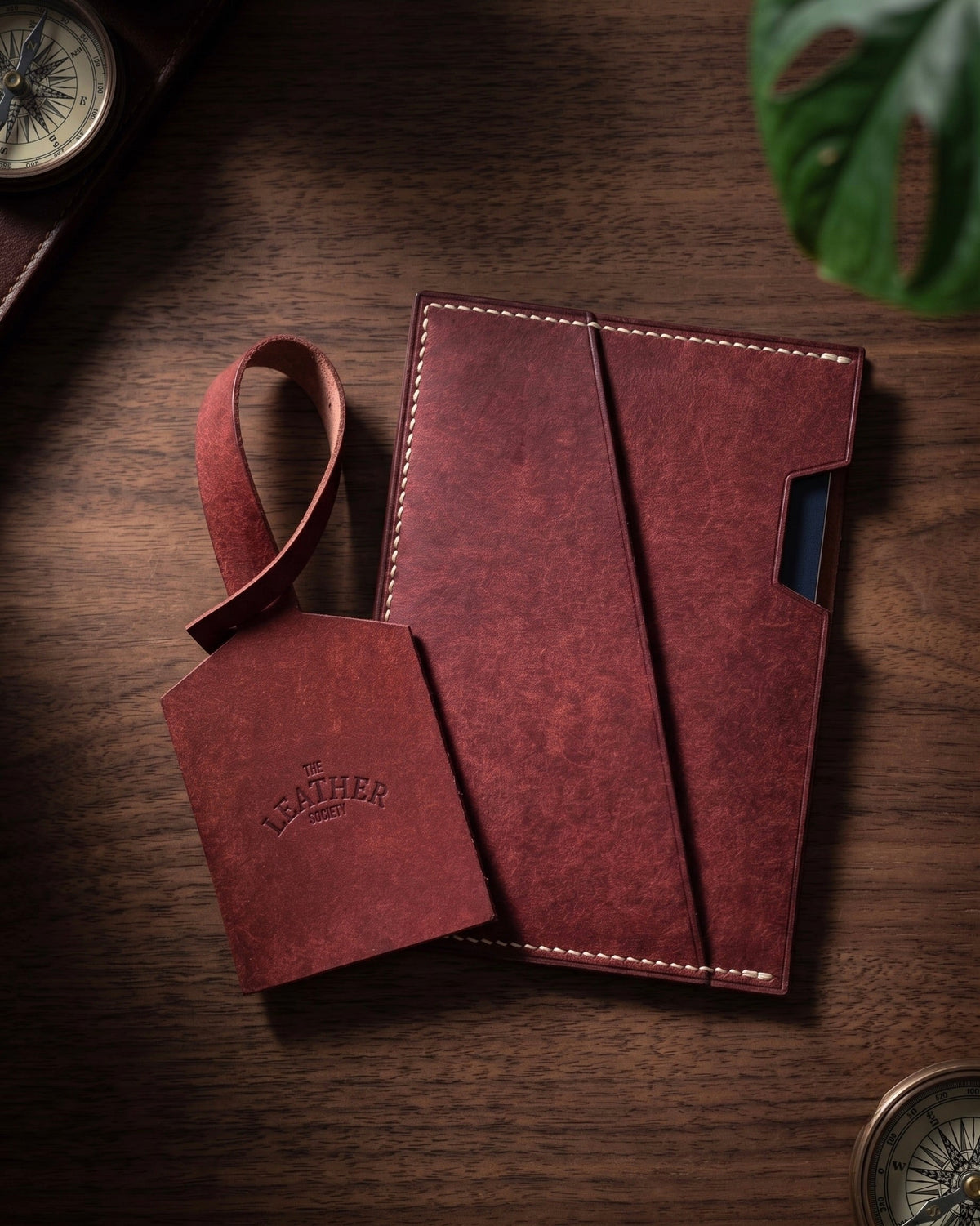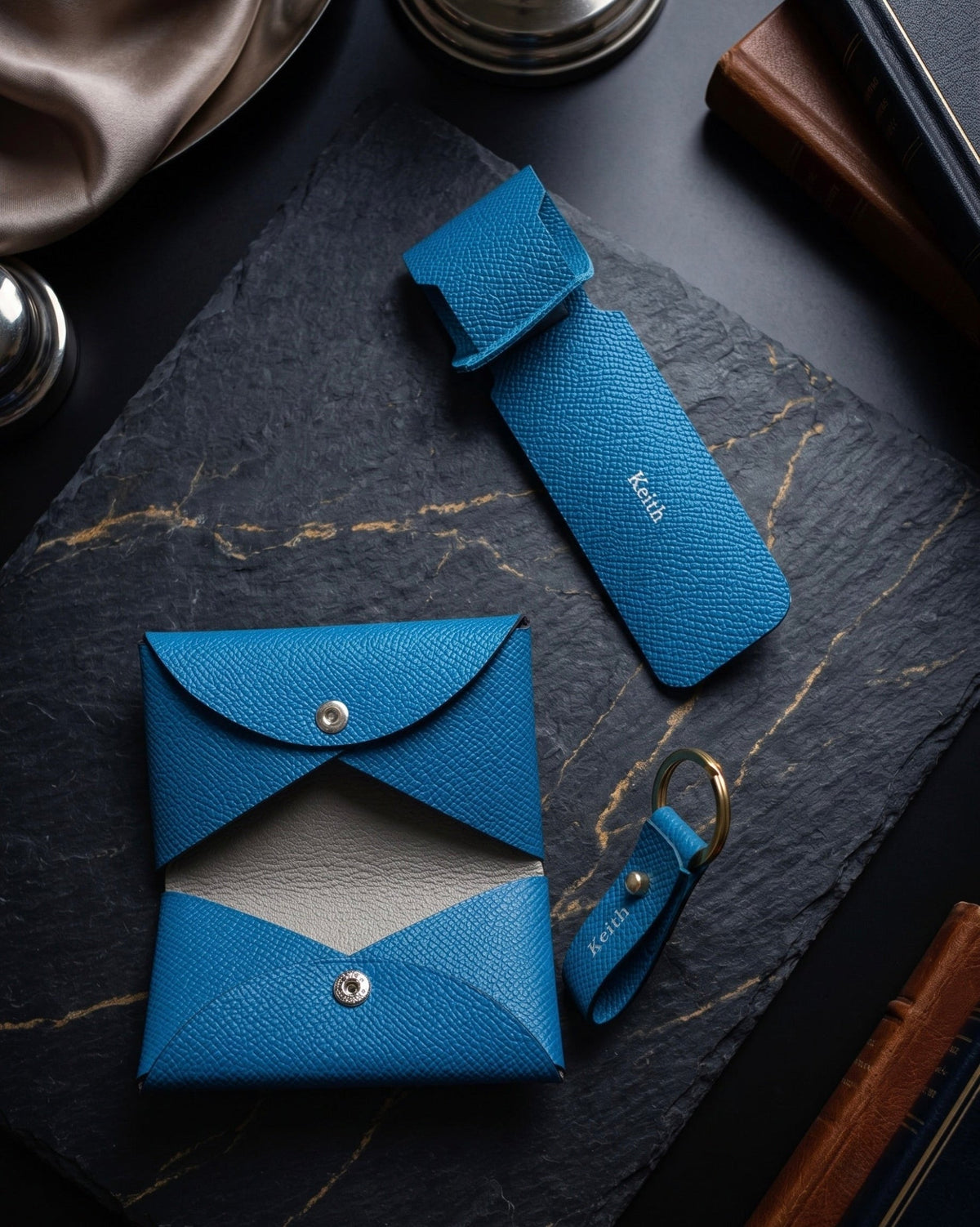
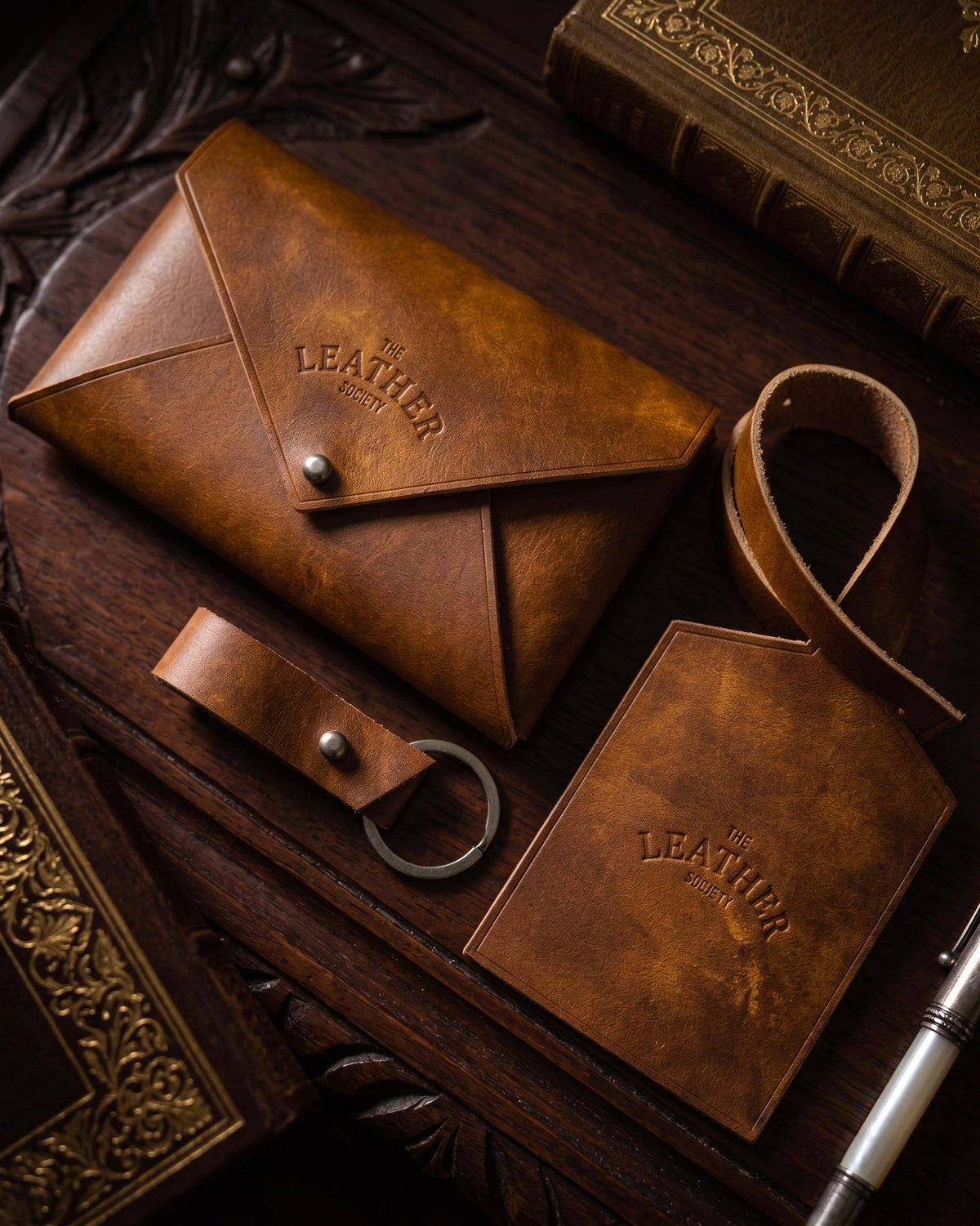
Conceria Walpier – Buttero Leather: A Guide to One of Italy’s Most Recognised Vegetable-Tanned Leathers
If you have spent any time exploring premium leather for wallets, bags, watch straps or handmade leather goods, you have probably come across Buttero leather by Conceria Walpier.
Known for its smooth surface, firm structure, rich colours and ability to develop a distinctive patina, Buttero has become one of the best-known vegetable-tanned leathers from the Tuscan leather district of Italy.
But what exactly is Buttero leather? Where does it come from, how is it made, and why is it so popular among leather artisans?
In this guide, we take a closer look at Conceria Walpier Buttero leather, including its tanning method, construction, characteristics, applications and what you can expect as it ages.
What Is Conceria Walpier?
Conceria Walpier is an Italian leather tannery based in Ponte a Egola, San Miniato, Tuscany, one of the historic centres of Italy's vegetable-tanning industry.
According to Conceria Walpier, the tannery was established in 1974 and has its roots in a family tanning tradition that began with Ciampalini Gino. The business was subsequently continued by Valter and Michele, who helped establish Walpier's leathers internationally.
Walpier is also a member of the Consorzio Vera Pelle Italiana Conciata al Vegetale, the Genuine Italian Vegetable Tanned Leather Consortium.
The consortium was established in 1994 and represents tanneries in Tuscany that produce vegetable-tanned leather according to the consortium's requirements and traditions.
This makes Conceria Walpier part of a very specific leather-making tradition: Tuscan vegetable tanning.
What Is Buttero Leather?
Buttero is a leather article produced by Conceria Walpier.
It is a vegetable-tanned bovine leather, commonly supplied in shoulder cuts, with a smooth grain-side surface and a relatively firm handle.
Leather distributors that carry the article consistently describe Buttero as full-grain, vegetable-tanned leather with a smooth, low-finish surface. It is also available in a wide range of colours, from traditional browns and blacks to more vivid shades.
One of Buttero's defining characteristics is that it does not try to hide the natural character of the leather beneath a heavy surface coating.
Instead, its relatively low-finish surface allows the leather's colour, grain and natural characteristics to remain visible.
The result is a leather that feels clean, structured and refined when new, while becoming increasingly individual with use.
How Is Buttero Leather Made?
Traditional Vegetable Tanning
Buttero is produced using vegetable tanning, a traditional tanning method that uses tannins derived from plant materials rather than mineral tanning agents such as chromium salts.
Conceria Walpier describes its production as part of the traditional Tuscan vegetable-tanning process, which requires time and specialised craftsmanship.
Vegetable tanning is particularly appreciated for producing leather that can develop significant changes in colour and surface character over time.
This is one of the reasons vegetable-tanned leather is so popular among leatherworkers and customers who want their leather goods to develop a visible history of use.
What Does Buttero Leather Look and Feel Like?
Fresh Buttero has a distinctive appearance that makes it relatively easy to recognise.
It generally has:
-
A smooth grain surface
-
A matte to low-sheen appearance
-
A medium-to-firm temper
-
Rich and saturated colours
-
A relatively clean, structured appearance
-
A natural grain surface rather than a heavily corrected appearance
-
The ability to develop a visible patina with use
Different suppliers may offer Buttero at different thicknesses and with variations in backing or finishing, so the exact feel can vary depending on the specification supplied by the tannery and how the leather has been finished or prepared for sale.
This is important when comparing Buttero samples: two pieces of Buttero do not necessarily feel identical simply because they carry the same article name.
Thickness, cut, finishing and preparation can all influence the final feel.
Is Buttero Leather Full-Grain?
Yes.
Buttero is widely specified as full-grain leather, meaning the grain surface has been retained rather than being heavily sanded away to remove the natural grain.
This is one of the reasons Buttero can display natural variations and why marks acquired through use can become part of its character.
However, full-grain does not mean flawless.
Natural leather can contain variations in grain, colour, small scars and other characteristics originating from the hide. With a relatively natural surface, these variations may remain visible rather than being completely concealed beneath an opaque finish.
For leather goods, this is generally considered part of the material's character rather than something that should automatically be regarded as a defect.
Why Is Buttero Available in Such Vibrant Colours?
One of the features that makes Buttero particularly popular among leatherworkers is its extensive colour range.
Alongside traditional colours such as black, brown and natural tones, Buttero is available in striking colours including greens, blues, reds, yellows and other shades depending on the tannery's current collection and market availability.
The colour is an important part of Buttero's appeal.
Rather than relying on a heavily coated surface to create its appearance, Buttero's relatively low-finish surface allows the colour and character of the leather to remain prominent.
Some suppliers also describe Buttero as dyed through, meaning colour extends through much of the leather rather than being confined solely to the surface. Exact specifications can vary by article and production, so this should not be assumed for every Walpier leather without checking the particular specification.
How Does Buttero Leather Age?
This is arguably the most appealing characteristic of Buttero.
Like many high-quality vegetable-tanned leathers, Buttero can develop a patina as it is exposed to handling, friction, light and the natural oils from the user's hands.
Over time, the surface can become smoother and develop greater depth and richness of colour.
Lighter colours, particularly natural or lighter brown shades, can show this transformation especially clearly.
A new Buttero wallet might initially have a relatively clean, uniform appearance. After months or years of use, the same wallet can develop darker tones, increased sheen and marks that reflect how its owner has used it.
That means two Buttero products made from the same colour can eventually look quite different.
And that is precisely the appeal.
Buttero is not designed to remain looking brand new forever. It is a leather that becomes more personal with use.
What Happens When Buttero Gets Scratched?
Buttero is not a scratch-proof leather.
In fact, its relatively natural surface means that scratches and handling marks can be visible, particularly when the leather is new.
However, many superficial marks can become less visually prominent as the leather is handled and naturally develops a patina.
This is one of the reasons Buttero is particularly popular for everyday leather goods.
Instead of trying to maintain a perfectly untouched surface, many owners embrace the marks as part of the product's history.
For someone who wants a leather wallet or accessory that develops character over time, this can be a major advantage.
For someone who wants a leather surface that remains pristine with minimal visible marking, a heavily finished or coated leather may be a more suitable choice.
Is Buttero Leather Durable?
Buttero is a firm, full-grain vegetable-tanned leather and is widely used for products where structure and durability are important. Leather suppliers commonly recommend it for wallets, bags, straps, portfolios, folders, belts and other leather goods.
However, it is important not to oversimplify leather durability.
The durability of a finished leather product depends on much more than the tannery.
Thickness, construction, stitching, edge finishing, pattern design, stress points, hardware and how the product is used all affect its service life.
A well-made Buttero wallet can be extremely durable, but simply specifying Buttero does not automatically make a poorly constructed product durable.
The leather is only one part of the finished product.
Why Do Leatherworkers Like Buttero?
Buttero is particularly popular among leatherworkers because its combination of structure, smoothness and workability makes it suitable for many traditional leathercraft applications.
Its relatively firm temper can help leather goods retain their shape, while its smooth surface provides a clean appearance.
The leather is commonly used for:
-
Wallets
-
Cardholders
-
Passport holders
-
Bags
-
Briefcases
-
Portfolios
-
Belts
-
Watch straps
-
Key fobs
-
Small leather accessories
-
Folders and document cases
Its surface and structure also make it particularly attractive for projects where clean edges and a crisp finished appearance are important.
For leather crafters, Buttero is therefore more than simply an attractive leather.
It is a practical material that can be used across a broad range of projects.
Is Buttero Good for Leather Crafting Workshops?
Absolutely.
For beginners and experienced leatherworkers alike, Buttero is an appealing material because its smooth appearance makes the results of cutting, stitching, edge finishing and personalisation easy to appreciate.
It also works particularly well for products where the leather itself is meant to be part of the visual experience.
At The Leather Society in Singapore, premium leather such as Buttero can be used for selected leathercraft projects where the material's colour, structure and ability to develop a patina add to the finished experience.
For a workshop participant, there is something particularly satisfying about creating a leather product that does not simply remain the same after the workshop.
It changes with you.
The wallet, cardholder or accessory you make today can look noticeably different after months of daily use.
Buttero Leather and Hot Foil Personalisation
Buttero is also an excellent choice when the finished leather product is intended to be personalised.
Its smooth surface provides a clean canvas for techniques such as hot foil stamping and debossed personalisation, although the exact result depends on the leather colour, surface specification, foil, temperature, pressure, dwell time and equipment used.
This is particularly relevant for corporate gifts, brand activations and live personalisation events.
At The Leather Society, we use precision-built hot foil stamping equipment and foils formulated for leather to create personalised initials, names, dates and branding on leather goods.
For corporate events, this transforms a leather gift from a standard giveaway into something guests can personalise and take away as a keepsake.
Why Choose Buttero for Corporate Leather Gifts in Singapore?
For companies looking for premium corporate gifts in Singapore, the choice of leather can have a significant impact on how the finished product feels and ages.
Buttero offers several characteristics that make it particularly attractive for premium gifting:
Premium Italian provenance
Buttero is produced by Conceria Walpier in Tuscany, Italy, a tannery with roots dating back to 1974.
Vegetable-tanned leather
Its traditional vegetable-tanning process gives the leather a distinctive character and allows it to develop a patina over time.
Full-grain construction
The natural grain surface is retained, giving the leather a more authentic material character.
Strong colour selection
Buttero is available in a broad range of colours, making it easier to coordinate leather gifts with corporate colours, event themes and brand identities.
Made to be used
Rather than being a disposable promotional item, a well-made Buttero leather product can become something recipients continue to carry and use.
This is particularly valuable for corporate gifting.
The objective is not simply to put a logo on an object.
It is to create something the recipient actually wants to keep.
Buttero Leather vs Other Italian Vegetable-Tanned Leathers
Buttero is not the only premium vegetable-tanned leather produced in Tuscany.
Other well-known Italian vegetable-tanned articles include leathers from tanneries such as Badalassi Carlo, as well as other products from the Tuscan tanning district.
The important point is that "vegetable-tanned Italian leather" is a broad category, not a single type of leather.
Different tanneries and articles can have dramatically different:
-
Temper
-
Grain
-
Surface finish
-
Colour
-
Oil and wax content
-
Texture
-
Aging behaviour
-
Structure
-
Recommended applications
Buttero is generally chosen when you want a smooth, clean, relatively firm leather with strong colour and a pronounced ability to develop patina.
That makes it particularly suitable for structured leather goods and minimalist designs.
How Should You Care for Buttero Leather?
One of the advantages of Buttero is that it does not require an elaborate maintenance routine.
For everyday products, the most important thing is simply to use the leather appropriately and keep it away from excessive moisture, heat and prolonged exposure to harsh conditions.
For routine care:
-
Wipe away surface dirt with a clean, soft cloth.
-
Avoid saturating the leather with water.
-
Allow wet leather to dry naturally at room temperature.
-
Avoid excessive application of conditioners or oils.
-
If conditioning is required, use a product appropriate for vegetable-tanned leather and test it on an inconspicuous area first.
-
Allow the leather to develop its patina naturally if you enjoy the way it changes with use.
Because Buttero has a relatively natural surface, applying too much oil, cream or conditioner can significantly alter its colour and appearance.
Less is usually more.
Does Buttero Leather Need to Be Perfect?
No - and this is one of the things that makes it special.
Natural leather is not manufactured to look like plastic.
Small variations in grain, colour and surface character can occur because leather is an animal-derived material.
With a relatively natural leather such as Buttero, those characteristics can remain visible.
For many leather enthusiasts, this is exactly what makes premium leather appealing.
The objective is not necessarily to create a material that looks identical from one piece to another.
It is to create a material that develops its own identity.
Is Conceria Walpier Buttero Leather Worth It?
If you are looking for a premium Italian vegetable-tanned leather with a smooth surface, firm structure, rich colours and strong patina potential, Buttero is one of the most compelling options to consider.
Its reputation comes from a combination of factors: Conceria Walpier's Tuscan tanning heritage, vegetable tanning, full-grain construction, distinctive colours and the way the leather develops with use.
It is not the right leather for every application.
If you need an extremely soft, lightweight or highly water-resistant leather, another leather construction may be more appropriate.
But if you want a leather that feels substantial, looks refined when new and becomes increasingly personal with age, Buttero is difficult to overlook.
Buttero Leather at The Leather Society Singapore
At The Leather Society, we believe premium leather should be experienced rather than simply described.
That is why we use carefully selected leathers for our leathercraft workshops, bespoke leather goods, corporate leather gifts and live personalisation experiences in Singapore.
For corporate clients, event organisers and brands, premium leather can be combined with on-site live embossing to create an interactive gifting experience where guests personalise their own leather goods with initials, names or other details.
The result is more than a branded giveaway.
It is a useful leather product that recipients can continue to carry, use and enjoy long after the event has ended.
Looking for premium Italian leather goods or a leather personalisation experience for your next event in Singapore?
Explore our leathercraft workshops and corporate leather gifts, or contact The Leather Society to discuss your requirements.
Frequently Asked Questions About Buttero Leather
Is Buttero leather made by Conceria Walpier?
Yes. Buttero is a leather article produced by Conceria Walpier, the Tuscan tannery based in Ponte a Egola, San Miniato, Italy.
Is Buttero leather vegetable tanned?
Yes. Buttero is a vegetable-tanned leather produced by Conceria Walpier.
Is Buttero full-grain leather?
Buttero is widely specified and sold as full-grain leather, retaining the natural grain surface.
Does Buttero leather develop a patina?
Yes. Buttero is known for developing greater colour depth, surface sheen and character through use. This patina is one of the reasons the leather is popular among leather enthusiasts and craftsmen.
Is Buttero leather waterproof?
No leather should be described as completely waterproof simply because it is vegetable tanned. Buttero is not a waterproof leather, and exposure to significant moisture can affect its appearance.
Is Buttero leather good for wallets?
Yes. Its smooth surface and relatively firm structure make it particularly suitable for wallets, cardholders and other small leather goods.
Is Buttero good for bags?
Yes. Buttero is commonly used for bags and other structured leather goods where a relatively firm leather is desirable.
Where is Conceria Walpier located?
Conceria Walpier is located in Ponte a Egola, San Miniato, Tuscany, Italy, within the historic Tuscan leather district.
When was Conceria Walpier founded?
Conceria Walpier states that it was established in 1974.
Is Conceria Walpier part of the Genuine Italian Vegetable Tanned Leather Consortium?
Yes. Conceria Walpier identifies itself as one of the tanneries belonging to the Consorzio Vera Pelle Italiana Conciata al Vegetale.
Is Buttero the same as Italian vegetable-tanned leather?
No. Buttero is one specific leather article produced by Conceria Walpier. Italian vegetable-tanned leather is a much broader category encompassing many different tanneries and leather articles.
Why is Buttero popular?
Buttero combines a smooth surface, relatively firm structure, rich colours, full-grain construction and strong patina potential. These characteristics make it particularly popular for wallets, bags, straps, belts and other premium leather goods.
Final Thoughts
Conceria Walpier Buttero is a distinctive example of Tuscan vegetable-tanned leather.
Its appeal is not based on a single specification or marketing claim. It comes from the combination of Italian tannery heritage, vegetable tanning, full-grain construction, smooth finishing, strong colour and the ability to develop a unique patina through use.
For leatherworkers, it offers a versatile material with enough structure for wallets, bags, straps and other leather goods.
For customers, it offers something equally important: a leather product that can become more personal over time.
It starts as a beautiful piece of Italian leather. With use, it becomes yours.

Written by The Leather Society Admin